
Marketing Funnel Design: Visualize Stage-by-Stage KPIs and Tactics
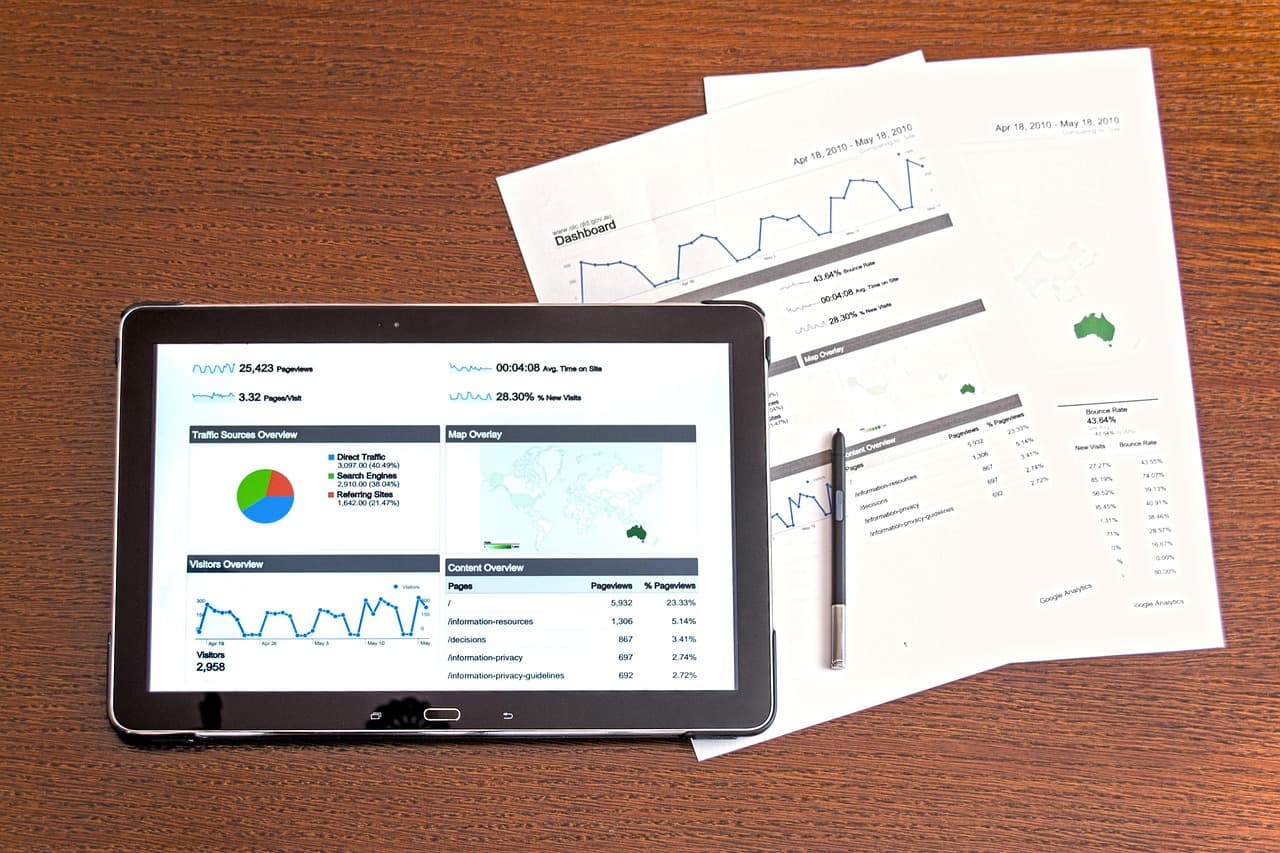
"We're running all kinds of campaigns, but I don't feel like they're actually driving revenue"—if you're a marketer, you've probably felt this nagging doubt at least once. You run ads, you post on social media, you send newsletters. But it's unclear which one is working and where. The cause is that your tactics are scattered as isolated "dots" and aren't connected as a "line" that follows the customer all the way to purchase.
The blueprint that draws that connection is the marketing funnel. From the moment a customer learns about your product, becomes interested, compares options, buys, and turns into a fan—you break this whole flow into stages and assign each stage a "KPI" and the "tactics you should run." Just doing that makes it instantly clear where things are getting stuck.
In this article, we walk through the basic structure of a funnel, the KPIs and tactics for each of the five stages—awareness, interest, consideration, purchase, and retention/referral—the relationship with purchase-behavior models such as AIDMA and AISAS, and the concrete steps to visualize it as a flowchart. By the time you finish reading, you should see a clear path to capturing your own funnel in a single diagram.
What you'll learn in this article
- The basic structure of a marketing funnel and the three benefits of designing one
- The KPIs and tactics for each of the five stages: awareness → interest → consideration → purchase → retention/referral
- The relationship between purchase-behavior models such as AIDMA and AISAS and the funnel
- The steps to visualize a funnel as a flowchart and how to draw it in Mermaid
- Common failure patterns in funnel design and how to counter them
What Is a Marketing Funnel? Three Benefits of Designing One
A marketing funnel is a model that represents, in stages, how prospects move from "learning about" a product or service to "buying it and becoming fans." A funnel is shaped like a funnel (a cone): the upper stages hold more people, and the count narrows as you move down—and that shape, resembling a funnel, is the origin of the name.
For example, if 10,000 people see an ad, 1,000 visit the site, 100 request materials, and only 10 ultimately buy—the count shrinks at each stage. Being able to grasp this "rate of shrinkage" in numbers is the funnel's greatest strength.
Three benefits of designing a funnel
- You can pinpoint bottlenecks: because you can see in numbers which stage has the most drop-off, you can isolate the cause—for example, "the ads are landing but purchases aren't growing = there's a problem at the consideration stage."
- You can prioritize your tactics: you can concentrate your limited budget and manpower on the most clogged stage. You don't need to put equal effort into every stage.
- Your team gains a shared language: when sales, marketing, and customer success all look at the same funnel diagram, it's instantly clear at a glance "which part we're each responsible for right now."

Minami
Process improvement lead
I think I'm watching the impact of each tactic, but honestly I have no idea where we're weak overall…

Spark
DrillSpark consultant
That's exactly where the funnel comes in. Instead of looking at each tactic one by one, line them up as the "flow" the customer takes until they buy. Then weaknesses pop out at a glance—like "the ads are strong, but half disappear at consideration."
Grasp the Five Funnel Stages as a Whole
A modern funnel doesn't end at the purchase. The mainstream approach is to design it to include post-purchase "retention" and "referral." Here, let's grasp the big picture across five stages: awareness → interest → consideration → purchase → retention/referral.
First, let's look at how the customer passes through each stage in a flowchart. The diagram below shows the funnel flow, including the decision at each stage (drop off, or move on to the next).
The key point is that a "decision (drop off or move on)" always sits between the stages. Rather than leaving people who drop off unattended, drawing the flow that routes them to "re-approach" or "nurturing (developing prospects)" makes for a design that reduces missed opportunities.
| Stage | Customer's state | Goal |
|---|---|---|
| Awareness | Learned that the product exists | Get them to know and remember you |
| Interest | Wants to know more | Deepen interest by providing information |
| Consideration | Comparing with competitors | Show the reasons to choose you |
| Purchase | Has decided to buy | Guide them to checkout without hesitation |
| Retention/Referral | Keeps using it and recommends it | Generate repeat use and word of mouth |
Assign KPIs and Tactics to Each Stage
A funnel doesn't function just by being split into stages. Only by assigning each stage "what to measure (KPIs)" and "what to do (tactics)" as a set does it become a blueprint you can actually operate. This is the heart of the design.
| Stage | Main KPIs | Representative tactics |
|---|---|---|
| Awareness | Impressions, reach, branded search volume | Web ads, social media, SEO, press releases |
| Interest | Site visits, time on site, newsletter sign-ups | Blog posts, white papers, newsletters |
| Consideration | Material requests, inquiries, demo sign-ups | Case studies, comparison tables, free trials, webinars |
| Purchase | Conversion rate (CVR), number of deals, average order value | Quotes, closing, improving the checkout path |
| Retention/Referral | Retention rate, churn rate, NPS, number of referrals | Onboarding, support, referral programs |
Watch both the "count" and the "rate" for KPIs
The trick with each stage's KPIs is to watch them not only by absolute count (e.g., 100 material requests) but also by conversion rate (e.g., what percentage of visitors requested materials). Chasing only absolute counts tends to reduce everything to "raise the ad budget and the numbers will grow," but watching conversion rates reveals "room to improve without increasing the budget."
Spark
DrillSpark consultant
When deciding a KPI, the trick is to ask yourself, "If this number moves, will the next stage's number move too?" If material requests went up but deals didn't grow, that might be a sign that the "quality" of those material requests is poor. Looking at the connections between stages is what matters.
The Relationship with Purchase-Behavior Models Like AIDMA and AISAS
When designing a funnel, purchase-behavior models are useful as a foundation. Knowing the representative AIDMA and AISAS lets you run tactics at each stage that account for "how the customer's mind is moving right now."
AIDMA: The basic model of the mass-media era
AIDMA is a model formed from the initials of Attention → Interest → Desire → Memory → Action. It's the basic form of purchase psychology, born in an era when customers received information one-way through TV commercials, magazine ads, and the like.
AISAS: The search-and-share model of the internet era
AISAS follows the flow of Attention → Interest → Search → Action → Share. The big difference from AIDMA is the inclusion of "Search" and "Share." It reflects modern behavior, where customers research on their own and, after purchasing, broadcast their experience via social media and word of mouth.
| Funnel stage | AIDMA | AISAS |
|---|---|---|
| Awareness | Attention | Attention |
| Interest | Interest | Interest |
| Consideration | Desire / Memory | Search |
| Purchase | Action | Action |
| Retention/Referral | — | Share |
As the table shows, in AISAS "Search" corresponds to the consideration stage and "Share" corresponds to the retention/referral stage. That's exactly why, in a modern funnel, SEO and review management to get found through search, and referral programs to get shared after purchase, become important.
Minami
Process improvement lead
There are so many models that I'm lost about which one to use. Do I have to memorize them all?
Spark
DrillSpark consultant
You don't need to memorize them all. What matters is weaving today's behavior—"customers search on their own before buying" and "they share their experience after buying"—into the funnel. Using AISAS as a handy checklist to remind yourself of that is plenty.
Steps to Visualize the Funnel as a Flowchart
Once you have the stages, KPIs, and tactics together, it's finally time to compile them into a single flowchart. Information scattered in your head or in a spreadsheet—the moment you turn it into a flowchart, "where the disconnects are" and "which drop-offs are being left unattended" rise to the surface. Let's proceed in the following five steps.
- Arrange the stages vertically: place the five stages from top to bottom, from awareness to retention/referral.
- Insert decisions between stages: draw the "move on / drop off" branch as a diamond.
- Draw where drop-offs go: add arrows that route dropped prospects to nurturing or re-approach.
- Attach a KPI to each stage: write the KPI into the node name or an annotation to make the measurement point explicit.
- Color-code or lane-split by responsible team: distinguish which team owns each stage—marketing, sales, CS, and so on.
A more practical funnel diagram that also draws the flow for recovering drop-offs is the next example. Note that it doesn't discard people who dropped off but returns them to the nurturing loop.
With DrillSpark, just talk and it becomes a diagram in 3 seconds
"Drawing flowcharts is a hassle, so I never keep it up"—this can be solved by your choice of tool. With DrillSpark, you just talk to it in plain language about the funnel you designed. The AI acts as a sounding board and generates a draft flowchart in about three seconds.
Furthermore, using the "drill-down" feature that digs into each funnel stage, you can, for example, open just the "consideration" stage and hierarchically organize the detailed tactic flow within it (webinar → one-on-one consultation → quote). You can keep the whole thing simple on a single page while drilling down for details. Because the generated diagram can be exported in Mermaid format, you can paste it straight into internal docs or a wiki.
Spark
DrillSpark consultant
The trick is to not let the funnel diagram be "made once and done." When you change a tactic, update the diagram too. With DrillSpark you can fix it just by talking, so the diagram stays a "living blueprint" that always matches reality.
Three Common Failures in Funnel Design and How to Counter Them
You built a funnel but it isn't driving results—the cause usually boils down to the following three. Knowing them in advance lets you reliably avoid them.
Failure 1: Making the purchase the goal
If you end the diagram at the purchase, you lose sight of the "post-purchase upside" such as retention rate and referrals. In many businesses, retaining and getting referrals from existing customers is more cost-effective than acquiring new ones. Always draw all the way to the retention/referral stage.
Failure 2: Leaving dropped-off people unattended
If you think "drop off at consideration = the end," you let slip prospects who took the trouble to show interest. By drawing a loop that returns those who dropped off to nurturing, you can develop even people who won't buy right now as "future customers."
Failure 3: Watching KPIs only by count, not by rate
If you chase only absolute counts, you can only reach the conclusion that "raise the budget and the numbers will grow." Watching each stage's conversion rate reveals weaknesses you can improve without increasing the budget. Always check count and rate as a set.
Summary | First, Capture Your Funnel in a Single Diagram
Summary of this article
- A funnel is a model that represents the purchase flow in five stages: awareness → interest → consideration → purchase → retention/referral.
- Only by assigning each stage a "KPI" and "tactics" as a set does it become a blueprint you can operate.
- Using AIDMA and AISAS as a foundation lets you weave in modern behaviors like search and share.
- Drawing a loop that returns drop-offs to nurturing makes for a design with few missed opportunities.
- The iron rule is to watch both count and rate and improve starting from the most clogged stage.
What matters in marketing funnel design is not aiming for perfection from the start. First, roughly write the numbers you currently know into the five stages from awareness to retention/referral. Just that lets you form your own hypothesis about the single most important question: "where is it getting clogged?"
Even the overall picture of tactics you've been vaguely turning over in your head—the moment you visualize it as a flowchart, the disconnects and missed opportunities become clearly visible. That said, drawing a diagram from a blank page is hard work. That's exactly when DrillSpark comes in.
Just talk to it in plain language about your funnel, and the AI generates a draft flowchart in about three seconds. Drill down stage by stage, and you can export the finished diagram in Mermaid. No credit card required—you can start for free. Begin by capturing your funnel in a single diagram.
Minami
Process improvement lead
When I heard it's just fitting KPIs and tactics into five stages, I started to feel like I could actually draw it. First I'll plug in our current numbers and see where it's clogged!
Spark
DrillSpark consultant
That first step matters more than anything! It doesn't have to be a perfect diagram—just start by getting your current state onto a single page. Once you can see the weakness, your next move falls into place on its own. I'm rooting for you!
Related Templates
Visualize your marketing funnel from awareness to purchase and loyalty. Map customer acquisition from ads, social, and events.
Visualize your sales process from lead generation to closing. Customize in 30 seconds with AI. Export to Mermaid for GitHub & Notion. Free to use.
Visualize promotion planning from concept, targeting, media selection, execution to performance measurement. Retail campaign management with AI.